Biosignals & interaction
Spider-Man Augmentation
An experimental arm-worn interface exploring whether physiological signals can become an expressive control channel.
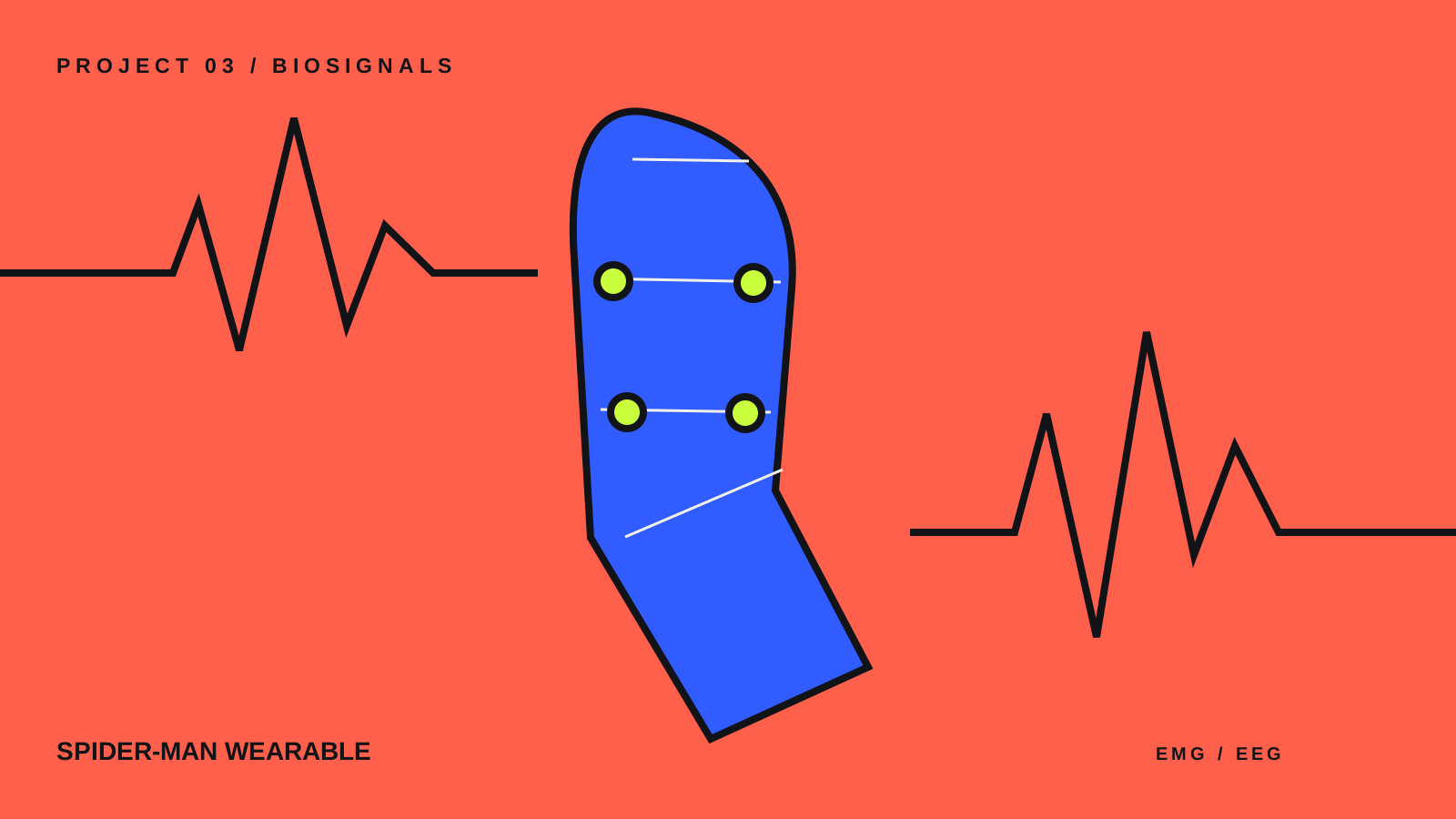
Overview
A comic-book idea, treated seriously.
The project begins with an expressive proposition: can electrical activity from the body drive an interaction that feels immediate and embodied?
To complete this section: what the wearable actually does, when and why you built it, whether EMG and EEG were both implemented, and your individual contribution.
Design intent
Turning intention into action.
We’ll define the interaction and explain why a physiological control channel was appropriate. The Spider-Man framing gives the project personality; the underlying sensing and usability problem gives it substance.
System
Signal, interpretation, response.
The system story will follow data from the body to the outcome: electrode placement, acquisition hardware, filtering, feature extraction or classification, control logic and feedback.
Useful material: sensor placement photographs, raw versus filtered traces, electronics, enclosure iterations, a block diagram and latency or accuracy measurements.
Prototype
Did it feel immediate?
A short demonstration should show the complete loop. Alongside it, we’ll report repeatability, false activations, comfort, latency and any informal or structured user testing available.
Reflection
Beyond the spectacle.
The final section can connect a playful prototype to serious questions in assistive technology, embodied interaction and reliable biosignal interfaces—without overstating what this version proves.